


🟢 Support & Strengthen version
The 14H Circadian Reset Protocol:
Restore Sleep, Focus, and Drive
You wake up at 2–4 a.m., run on caffeine, feel foggy and drained. Your body’s clock is out of sync.
Restore it — and your sleep, drive, and focus return to full power.
When
matters
more
than
What
"Every single physiological function is under inner clock control. Attention, libido, you name it."
— Dr. Michael Rosbash
Nobel Prize in Physiology and Medicine 2017 for discoveries of molecular mechanisms controlling the circadian rhythm (inner clock)

Introduction to
14H Circadian Reset Protocol
What Are Circadian Rhythms
🕐
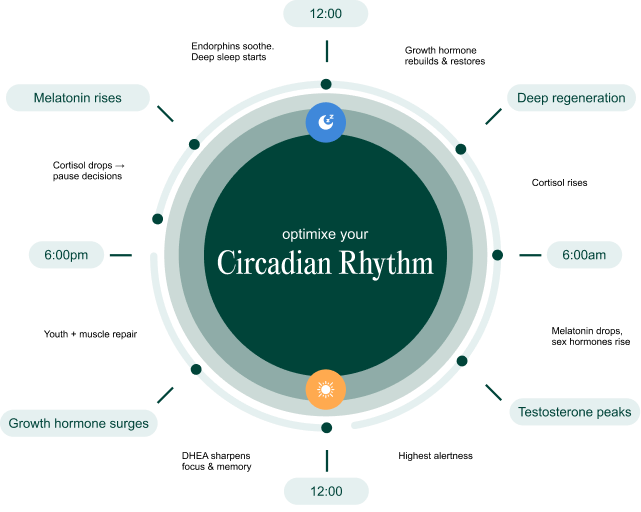
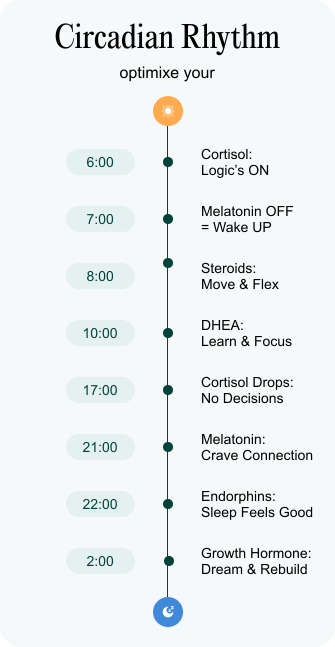
Circadian rhythms are your body’s built-in productivity timer, wired into every cell.
They sync with four daily cues — light, movement, food, and behavior — the four pillars of this Protocol. When rhythms stay aligned:
Morning brings rises in glutamate, dopamine, and norepinephrine → your brain is sharp and focused
Evening boosts GABA and melatonin → your body relaxes and restores
What Happens When Rhythms Break
⚡
Modern life — late screens, afternoon coffee, chronic stress, and irregular sleep — throws those rhythms off balance:
The brain receives “daytime” signals at night
Glutamate and norepinephrine fire out of sync
Leading to brain fog, anxiety, loss of focus, and emotional flatness
The Role of Glutamate
🧠
Glutamate is the brain’s main accelerator. It powers cognition — but in excess, it overheats neurons.
When rhythms are intact, glutamate clears naturally during sleep.
When they’re broken, it lingers in the brain, creating mental fatigue and cognitive burnout.
How to Restore Balance
🌙
Regular sleep, daylight exposure, morning movement, and plant-based neuromodulators help reset the system.
The 14 Hours formula is built on this principle:
AM Drops — activate morning focus (Eleuthero, Maca, Ashwagandha)
NOON Drops — stabilize midday energy and regulate glutamate (Bacopa, Lion’s Mane)
PM Drops — support nighttime recovery (Ginkgo, Chamomile, Valerian)
Why It Matters
📈
Circadian rhythms aren’t just about “sleep hygiene”. They’re the master control system of cognitive performance.
When they’re disrupted, even top-tier nootropics, coffee, and meditation stop working.
When they’re restored — your brain runs fast, clear, and naturally stimulant-free.
90-Day Progress Timeline
(Realistic)
Weeks 1–2: Fall asleep faster; mornings start easier (↑CAR); fewer nighttime “mind loops.” PubMed
Weeks 3–6: More stable energy; fewer “late-day crutches” (individual results vary); deeper sleep quality. PubMed
Weeks 7–12: Fully stabilized rhythms, calmer mood; if meal timing is consistent — improved metabolic markers. Nature
How to Use the Protocol
(90 Days)
Weeks 1–2: Set light anchors (steps 1–3), add daily walks, and fix caffeine timing (steps 4, 12).
Weeks 3–6: Implement meal timing (steps 7–10) and introduce physical or playful sessions (step 6).
Weeks 7–12: Stabilize sleep patterns (step 14), replace evening stimulants with recovery rituals (step 13), support your microbiome (step 10).
If by Day 21/42/84 your sleep latency remains >20 minutes, or you still wake up during the night — book a personalized rhythm review session >>>
We’ll tailor your light exposure, meal window, activity level, and AM/NOON/PM timing to your schedule and chronotype.


The 14 Hours Circadian Reset Protocol
This protocol works through four systems
☀️ LIGHT
🏃♂️ MOVEMENT
🍽 FOOD
🧘♂️ DAILY RITUALS
to bring your body’s internal clock back in sync.
☀️ LIGHT
☀️ light. Morning Sun — The Day’s Anchor
step 1
When:
Within 30 minutes after waking.
Duration:
10–20 minutes of outdoor light exposure (skip the sunglasses — your retina is your main circadian sensor).
Why:
It gives your brain a clear “daytime” signal → easier to wake, less morning fog.
What disappears:
The urge to stay in bed or grab caffeine right after waking fades naturally.
Why it works:
Morning light triggers a natural cortisol awakening response (CAR) and suppresses leftover melatonin → less sleep inertia.
Evidence snapshot:
Morning light strengthens CAR; short-wavelength light enhances the effect. PMC
14HRS Tip (*for US only):
AM drops act as a smooth “on-switch” without jitters or crashes.

☀️ Light. Midday Light Breaks
step
2
When:
Every 2–3 hours.
Duration:
2–3 minutes outdoors or on a balcony (even on cloudy days). Daily.
Why:
Keeps daytime energy steady, reduces afternoon dips, and supports deeper sleep at night.
What disappears:
That post-lunch “walking coma” shortens and fades.
Why it works:
Daylight exposure boosts rhythm amplitude and raises nighttime melatonin later.
Evidence snapshot:
More daylight → better sleep and well-being; bright light during the day improves nighttime melatonin and rhythm amplitude. PMC
14HRS Tip (*for US only):
NOON blend supports focus through the second half of the day — no need for a “second coffee.”
☀️ Light. Evening Light Hygiene
step
3
When:
After sunset until bedtime. Daily.
What:
Warm light (2000–2700K), dim brightness; after 9 PM, use amber glasses if needed.
Why:
Prevents melatonin suppression and phase delay; shortens sleep latency and reduces nighttime awakenings.
What disappears:
The habit of scrolling in bed fades — falling asleep becomes effortless.
Why it works:
Bright or blue light at night delays melatonin and shifts circadian timing later.
Evidence snapshot:
Evening screen light delays melatonin and worsens sleep; even standard room light suppresses melatonin. PNAS
14HRS Tip (*for US only):
PM blend helps you slow down and switch into “night mode.”
SHORT CUT service
Customize the 14H Protocol
(*for US only)
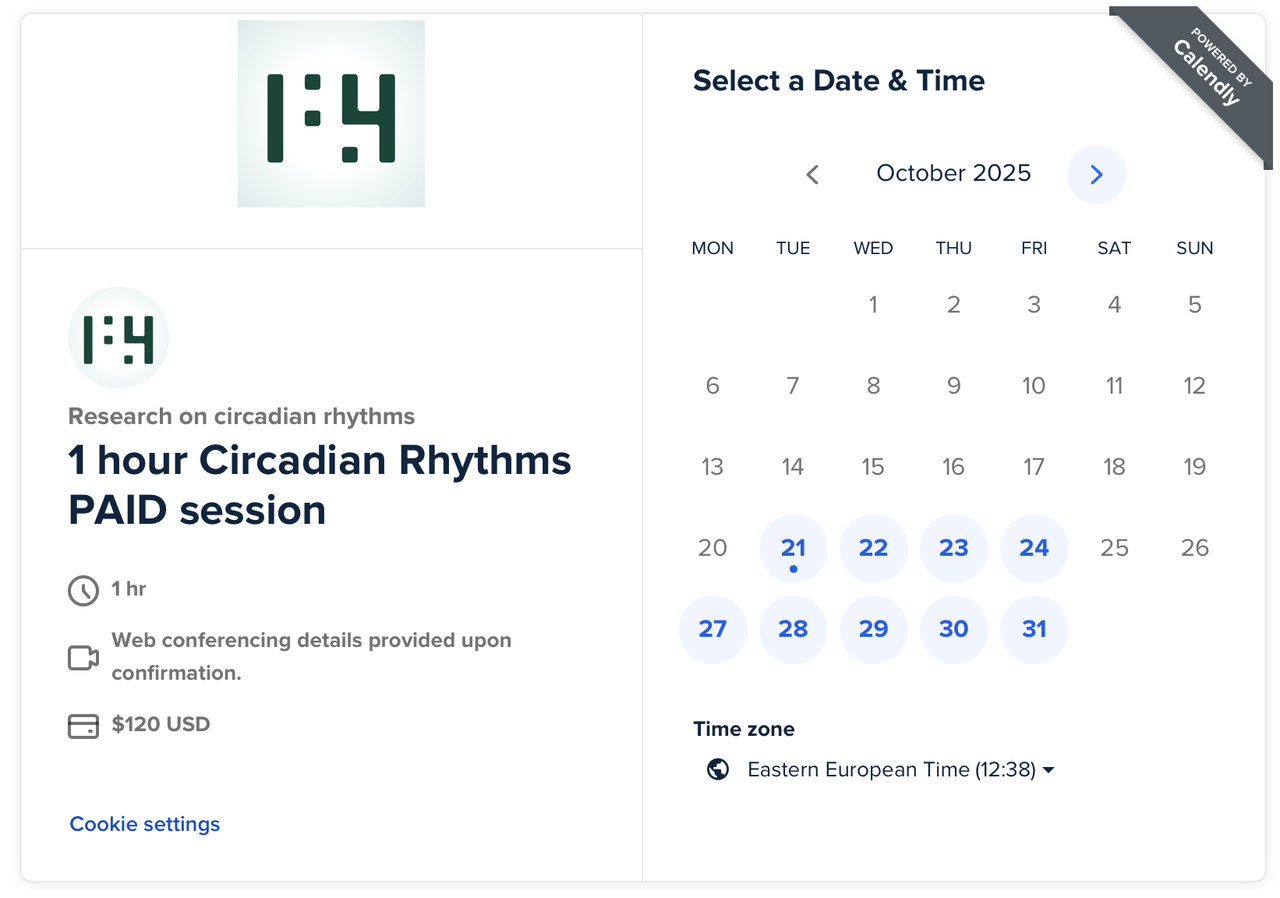
For best results, we strongly recommend booking a paid session with our specialist.
This will ensure you’re fully prepared to work with the protocol effectively.
🏃♂️ MOVEMENT
🏃♂️ MOVEMENT. The Cortisol Walk
step
4
When:
During daylight hours (ideally around noon).
Duration:
40 minutes of walking. Daily.
Why:
Helps clear excess cortisol, balances neurotransmitters, and sharpens focus.
What disappears:
The urge to grab a “sweet fix” or snack for energy after lunch.
Why it works:
Moderate daily movement + light strengthens the day/night rhythm and improves sleep quality.
Evidence snapshot:
Moderate exercise improves sleep quality (meta-analyses). PubMed
14HRS Tip (*for US only):
NOON helps maintain focus even when the walk is shorter.
🏃♂️ MOVEMENT. Cold Reset (optional)
step
5
When:
2–3 times per week.
Duration:
30–90 seconds of cold water at the end of a shower.
Why:
Quick HPA-axis reset, better stress tolerance, more balanced mood by evening, faster alertness in the morning.
What disappears:
The habit of reaching for a “relaxing drink” or energy shot later in the day.
Why it works:
Brief cold exposure supports mood and subjective stress resilience; data remains mixed but trends are positive.
Evidence snapshot:
Cold exposure shows potential mood/stress benefits and may aid sleep; acute mood improvement observed. PLOS ONE
14HRS Tip (*for US only):
NOON is your softer mid-day reset — no extremes required.
🏃♂️ MOVEMENT. Strength or Play Session
step
6
When:
Daytime.
Frequency:
2× per week — gym, dance, team sports.
Why:
Muscle work → better glucose use → deeper sleep → stronger day/night divide.
What disappears:
The “night-owl drift” — you start falling asleep earlier without forcing it, and alcohol as a sleep aid becomes unnecessary.
Why it works:
Regular exercise moderately improves sleep latency, efficiency, and perceived quality.
Evidence snapshot:
Exercise shows small-to-moderate but consistent sleep benefits (meta-analysis). PubMed
14HRS Tip (*for US only):
PM helps prevent post-workout overstimulation when training later in the day.
SHORT CUT PRODUCTS
🏃♂️
You can rebuild rhythm through daily light and movement alone — but if your energy still swings or recovery feels slow, this shortcut helps your body lock into balance faster.
14 HOURS supports the same cortisol and neurotransmitter curve you’re training through movement — keeping focus steady through the day and recovery smooth at night.
🍽 FOOD
🍽 food. Early Dinner
step
7
When:
3–4 hours before bedtime; last meal by 6 PM. Daily.
Why:
Your body restores at night, not digests; syncing meals reinforces rhythm stability.
What disappears:
Morning heaviness, night sweats, and thirst from late heavy dinners.
Why it works:
Earlier eating improves insulin sensitivity and metabolic markers.
Evidence snapshot:
Early time-restricted feeding (eTRF) improves insulin resistance, blood pressure, and oxidative stress even without weight loss. PubMed
14HRS Tip (*for US only):
PM curbs evening overstimulation and late-snack cravings.
🍽 FOOD. Early Eating Window (eTRE)
step
8
When:
8 AM–6 PM (Breakfast 8–10, Lunch ~12, Dinner before 6).
Why:
Stabilizes glucose and evens out dopamine/serotonin swings — no “sugar chase” or caffeine crash by late morning.
What disappears:
Sugar highs, afternoon dips, and late-night hunger spikes.
Why it works:
Shifting calories earlier in the day improves multiple metabolic parameters.
Evidence snapshot:
eTRE/eTRF improves insulin sensitivity and glycemic control (RCTs, reviews). PubMed
14HRS Tip (*for US only):
AM and NOON support focus and energy during the fasting window — no stimulants needed.
🍽 food. The Anchor Breakfast (Protein + Fiber)
step
9
When:
Within the first hour after waking.
What:
25–35g protein + fiber/whole foods.
Why:
Keeps energy stable till lunch and reduces sugar cravings.
What disappears:
Uncontrolled snacking around 11–12 AM.
Why it works:
Morning protein lowers ghrelin (hunger hormone), increases satiety, and prevents mid-morning crashes.
Evidence snapshot:
High-protein breakfast reduces ghrelin, improves satiety, and lowers cravings (RCTs). PubMed
14HRS Tip (*for US only):
AM supports smooth mental activation — focus without sugar.
🍽 FOOD. Microbiome Support
step
10
When:
Daily.
What:
1–2 servings of fermented foods + omega-3 sources (fish, flax, algal oil) + fresh sprouts.
Why:
Supports the gut–brain axis, boosting nighttime melatonin synthesis and morning clarity.
What disappears:
Sugar cravings fade; evening overeating becomes rare; energy stays stable.
Why it works:
Omega-3s and fermented foods show positive effects on perceived sleep quality and stress modulation.
Evidence snapshot:
Omega-3s correlate with better sleep (RCTs, reviews); probiotics lower PSQI sleep scores in RCTs. PubMed
14HRS Tip (*for US only):
NOON and PM help maintain balanced tone — no stress snacking needed.
SHORT CUT PRODUCTS
🍽
Meal timing sets the rhythm, but metabolism sometimes needs extra guidance. If you’re adjusting your window or fighting sugar drops, this shortcut keeps your system on track.
The 14 HOURS AM/NOON blends align with your metabolic clocks — while Sleeping Easy supports overnight repair of the gut–brain axis. Together, they make consistency easier.
🧘♂️ DAILY RITUALS
🧘♂️ RITUALS. Digital Curfew
step
11
When:
After 9 PM — no news feeds or messages; just quiet rituals: light film, music, or calm talk. Daily.
Why:
Helps you fall asleep faster and stay asleep longer.
What disappears:
The “just five more minutes” scrolling reflex.
Why it works:
Evening screen light delays melatonin and pushes circadian timing later.
Evidence snapshot:
Screen reading before bed delays melatonin, worsens sleep, and shifts circadian phase. PNAS
14HRS Tip (*for US only):
PM helps you transition from screen to sleep smoothly.
🧘♂️ RITUALS. Coffee Cut-Off — Before 2 PM
step
12
When:
Keep all caffeine intake before 2 PM; max 1–2 servings per day.
What to do:
Replace the second cup with a NOON ritual — 3-minute water break + NOON drops instead of caffeine.
Why:
Sustains focus without overstimulation; prevents late-night alertness.
What disappears:
Lying awake at night because of “just one late coffee.”
Why it works:
Caffeine even 6 hours before sleep reduces total sleep time and melatonin production.
Evidence snapshot:
RCTs confirm caffeine 0/3/6 hours before bed disrupts sleep; also reduces nocturnal melatonin. PMC
14HRS Tip (*for US only):
NOON is your “evening espresso” alternative — no crash, no delay.
🧘♂️ RITUALS. Evening Replacement Ritual
step
13
When:
Every evening.
What:
Warm herbal tea, shower, 10-minute walk, or 4-7-8 breathing.
How:
Don’t “cut off” habits — replace them.
Why:
Removes evening “crutches” without losing the ritual of unwinding.
What disappears:
Nighttime awakenings and morning heaviness.
Why it works:
Alcohol and nicotine disrupt REM architecture and increase sleep fragmentation.
Evidence snapshot:
Alcohol and nicotine impair sleep quality and structure (systematic reviews). PMC
14HRS Tip (*for US only):
PM blend replaces the “evening glass” — relaxation without side effects.
🧘♂️ RITUALS. Stable Wake & Sleep Times
step
014
When:
Wake before 7 AM (ideally at sunrise), sleep before 10 PM — same on weekdays and weekends.
Why:
Regular timing is the strongest driver of rhythm stability and clarity.
What disappears:
“Social jetlag” — weekend drift and the Monday fog.
Why it works:
Sleep regularity matters more than duration for many outcomes; inconsistency increases metabolic risk.
Evidence snapshot:
Sleep timing regularity correlates with better outcomes and lower risks. Sleep Health Journal
14HRS Tip (*for US only):
AM and PM serve as daily anchors to keep your rhythm steady.
SHORT CUT PRODUCTS
🧘♂️
RITUALS anchor your rhythm — but if stress, screens, or late thoughts still keep you wired, this shortcut helps your mind and body power down naturally.
Sleeping Easy restores calm and cognitive recovery at night; 14 HOURS PM reinforces your wind-down phase, syncing hormones and neurotransmitters for deep, natural rest.
SHORT CUT service
Customize the 14H Protocol
(*for US only)
For best results, we strongly recommend booking a paid session with our specialist.
This will ensure you’re fully prepared to work with the protocol effectively.